Humanoid robot terms explained in plain English
A plain-English glossary of the words you meet on humanoid robot spec sheets and in launch news, from DoF and actuators to VLA models, teleoperation and TOPS.

On this page
Robot spec sheets are written for engineers. Launch news is written for investors. Neither is written for the person deciding whether to put a robot in their living room. This glossary explains the terms you will meet on Everyboti's robot pages and elsewhere, in plain English, with real examples.
Key facts
- The most useful specs for a home buyer are price, battery life, payload, weight and whether remote humans are involved
- Degrees of freedom tell you how many ways a robot can move, not how well it does chores
- VLA models are the type of AI most home robots now use to turn what they see and hear into movement
- Teleoperation means a person controls the robot remotely
Body and movement
Degrees of freedom (DoF)
The number of separate ways a robot can move. Each joint that bends or rotates in one direction adds one. A human arm has about seven, from shoulder to wrist, not counting the hand. Booster K1 has 22 in total. Kinetix AI says its KAI has 115, of which 72 are in the hands. More DoF means more flexible movement, but also more parts to control and maintain. A high number does not prove the robot is useful.
Actuator
The motor unit that moves a joint. Actuators are the muscles of a robot and one of its most expensive parts. Figure says it produced more than 9,000 actuators in its factory by April 2026.
Torque (N·m)
How much turning force a joint can produce, measured in newton-metres. Higher torque at the knees and hips helps a robot stand up, carry weight and recover balance. EngineAI quotes a peak joint torque of 450 N·m for its T800.
Payload
The weight a robot can hold while working, often per arm. Not the same as a one-off lift. See how much can a humanoid robot lift?
Bipedal
Walks on two legs, like 1X NEO and Unitree G1.
Wheeled base
A robot with a human-like upper body on wheels, like Weave Isaac 1 or LG CLOiD. More stable, cannot climb stairs. See wheeled vs walking home robots.
Dexterous hand
A robot hand with several independently moving fingers. The opposite is a simple gripper or claw. NEO's hands have 22 degrees of freedom each.
End effector
The tool at the end of a robot arm. On a humanoid it is usually a hand or a gripper.
Compliant
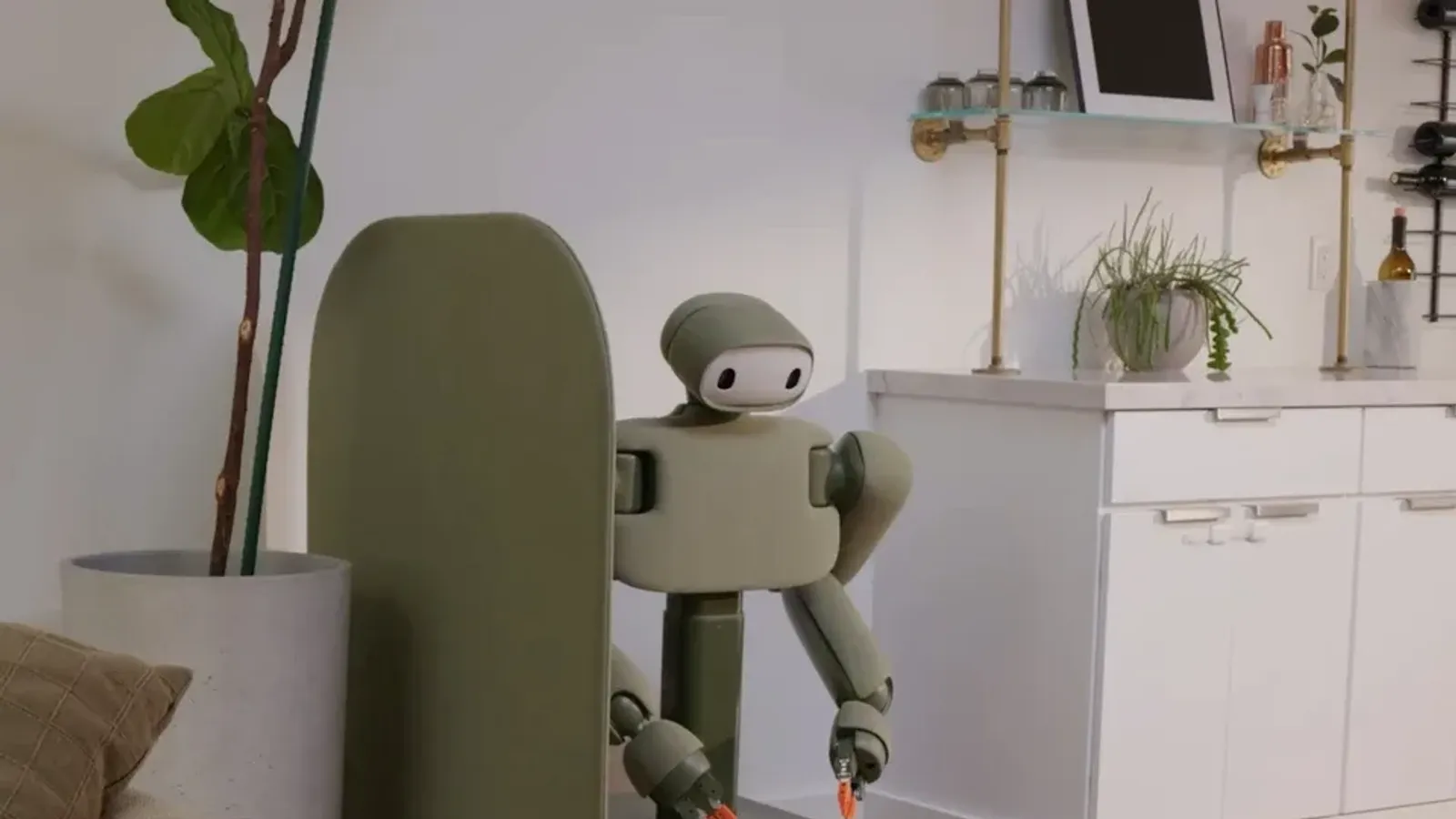
A joint or arm that gives way when pushed instead of forcing through. A safety feature. Sunday says Memo's arms are compliant.
Sensing
Depth camera
A camera that measures distance as well as colour, so the robot knows how far away things are. SwitchBot's Onero H1 uses Intel RealSense depth cameras.
Lidar
A sensor that measures distance with laser pulses to map a room. Nori A3 has a lidar with a 12 m range.
Tactile sensing
Touch sensors, usually in the fingertips or skin. Figure says Figure 03's fingertips detect forces as small as 3 grams.
IP rating
How well a device is sealed against dust and water. Two digits, the second for water. NEO's hands are rated IP68, and Memo's hands IP67, which matters for a robot that works near sinks.
Brains and software
TOPS
Trillions of operations per second, a rough measure of the robot's onboard computing power for AI. Booster K1 ranges from 48 TOPS (Geek) to 200 TOPS (Professional). More TOPS lets a robot run bigger AI models on board.
VLM (vision language model)
An AI model that understands images and text together, so a robot can answer "what is on the table?"
VLA (vision language action model)
An AI model that takes what the robot sees and what you tell it, and outputs movements. It is the step from understanding to doing. LG says CLOiD uses VLM and VLA models, and SwitchBot calls its on-robot model OmniSense VLA. Figure's Helix is its own model of this kind.
Foundation model
A large AI model trained on huge amounts of data that can then be adapted to many tasks. DOBOT calls its own robot model DobotWAM an embodied foundation model.
Embodied AI
AI that lives in a physical body and acts in the real world, rather than only producing text or images.
Imitation learning
Teaching a robot by showing it examples of a task. Sunday collects these examples with gloves worn by people doing chores at home.
Reinforcement learning
Teaching a robot by trial and error, usually in simulation, rewarding what works. Commonly used for walking and balance.
Sim-to-real
Training a robot in a computer simulation, then transferring what it learned to the real robot.
Zero-shot
A robot doing a task in a place it has never seen, without extra training there. Figure's test in 30 unseen homes was a zero-shot test.
SDK and ROS 2
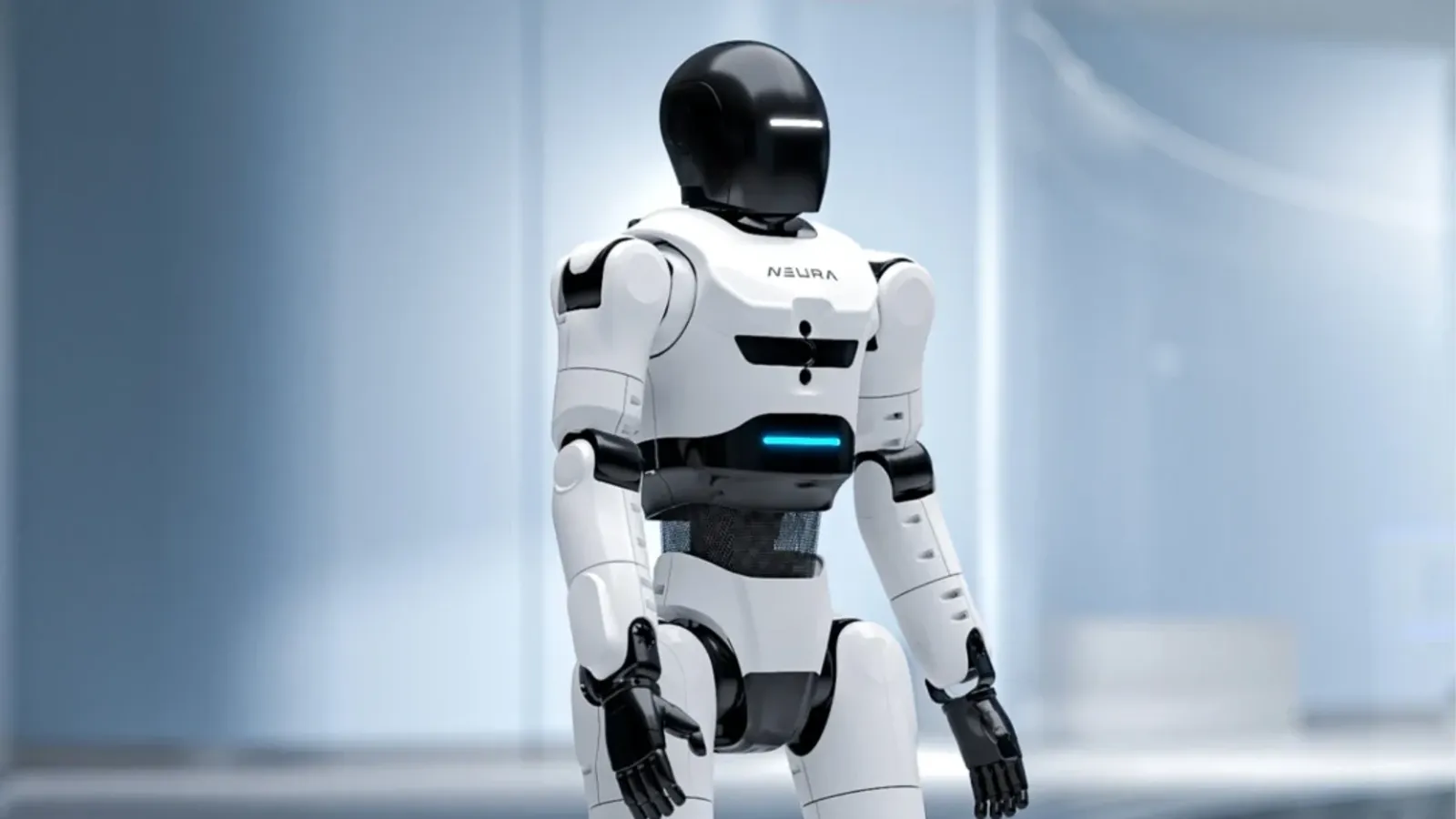
An SDK (software development kit) is the toolkit for programming a robot. ROS 2 is a widely used open-source framework for robot software. NEURA's 4NE1 Mini supports both.
EDU version
On Unitree robots, the edition that owners can program. The standard G1 and R1 do not support owner programming, according to Unitree.
Operation
Teleoperation
A person controls the robot remotely, seeing through its cameras. Used to finish tasks the robot cannot do alone and to collect training data. See what is teleoperation?
Autonomy
How much a robot does on its own, without a human. Makers rarely publish how autonomous their robots are in real homes.
Hot-swappable battery
A battery you can change without switching the robot off. Fourier's GR-3 has one.
Wh and kWh
Watt-hours, a measure of battery capacity. NEO has an 842 Wh battery. More capacity usually means longer runtime, but also more weight.
Buying terms
Preorder
Paying, or putting down a deposit, for a robot that ships later.
Taking interest
A waitlist or sales contact without a public order form.
Read what announced, preorder and shipping mean for all of Everyboti's status labels.
The terms that matter most when you buy
Most spec sheet numbers are hard to compare and easy to overrate. When I look at a new robot, I check price, battery life, payload, weight, whether it walks or rolls, and whether remote humans are involved, before I look at DoF or TOPS. A robot with fewer joints and a clear answer on those basics is usually a better bet than one with record specs and no order page.